Designr.
What was I trying to solve
A self-directed project creating a community platform where mentees receive
structured critique and mentors get paid for their expertise
A self-directed project: a gamified platform where designers receive structured, discipline-specific feedback from peers. Mentees learn, mentors earn.
My proposal was to create a community platform where designers receive structured feedback on their work from peers and mentors within their discipline.
The target audience is mainly for students and early career professionals seeking meaningful critique and skill development in a collaborative and encouraging environment.
By talking to other designers and mentors in their discipline, users get a more well-rounded approach, understanding different perspectives, not just those within their own silo - something I learnt from my nine month placement as an associate service designer. Mentees pay a subscription fee to receive feedback from mentees, whilst being able to get free peer feedback from those at their level.
Primary Research
Secondary Research
Personas & Journey Mapping
Wireframing & Prototyping
User testing & Iteration
Questionnaire
Competitor Analysis
User interviews
Personas
Iterative Design
High fidelity prototypes for both mentors and mentees
THE BRIEF
THE GOAL
KEY PHASES
METHODS
OUTPUT
Understanding the landscape
The research phase covered domain research, statistical data, competitive analysis and a student questionnaire. It confirmed both the gaps in the market and the depth of the problem.
Existing platforms either provide superficial engagement, prevent growth through expensive courses or offer limited scalability through mentor availability constraints.
RESEARCH
WIREFRAMING &
PROTOTYPING
The most complex part of this project was designing two distinct but connected journeys. Both needed to feel complete and right for their intended user, whilst working together as one coherent product, with the mentors expertise directly serving the mentees growth.
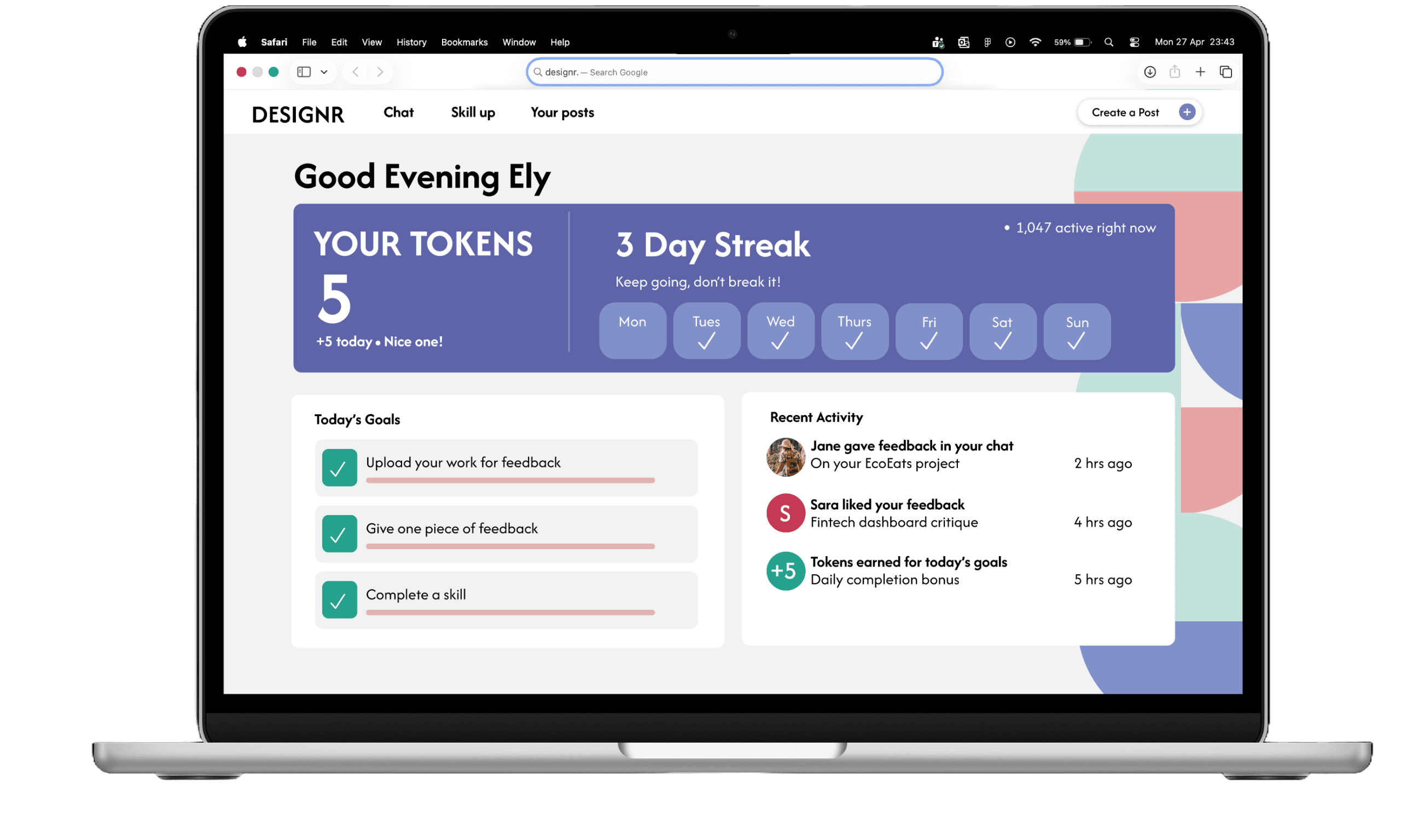
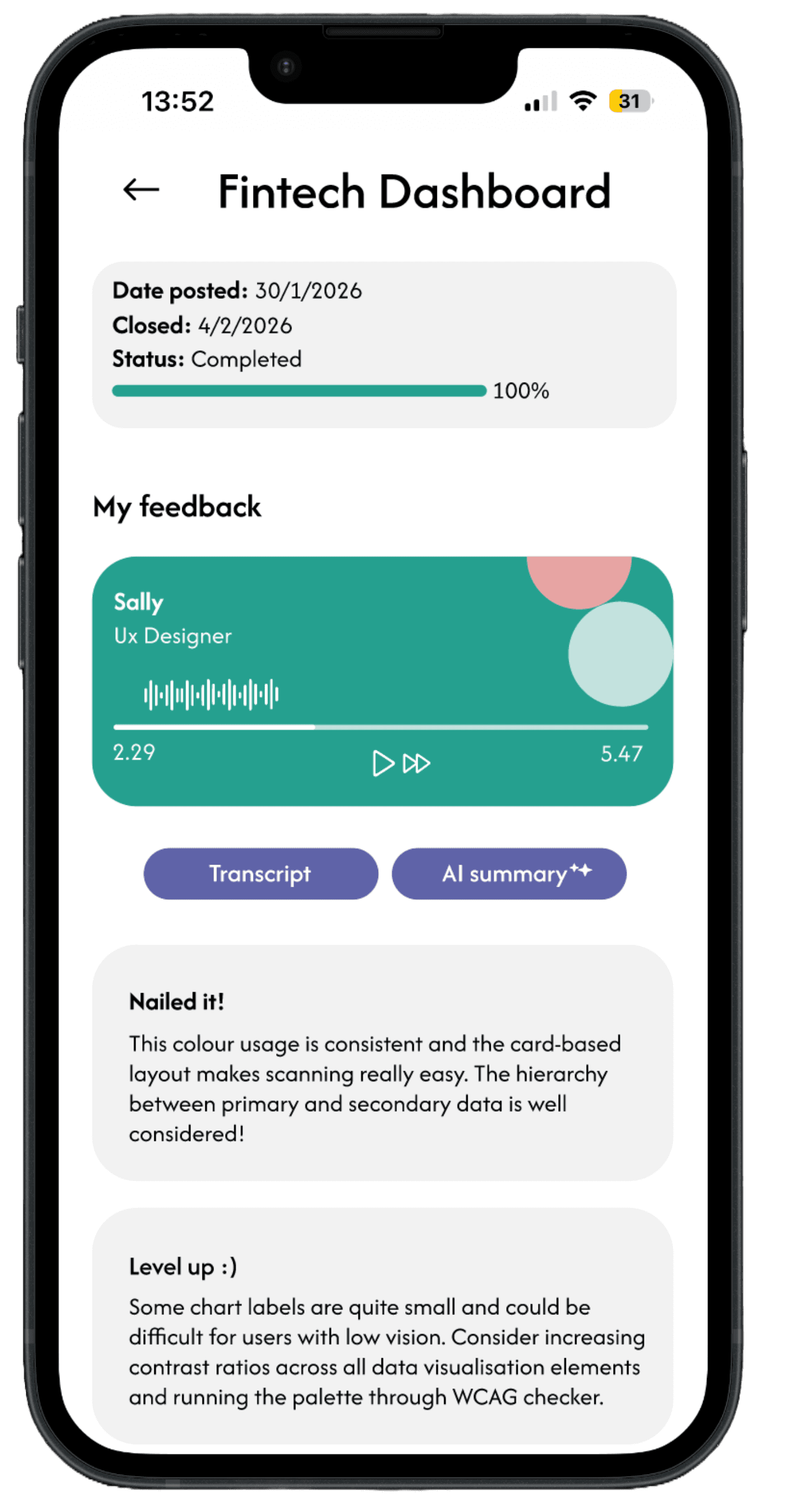
High-fidelity interactive prototypes were built across phone and laptop, for both journeys on Figma.
The entire solution was built using a consistent visual system: colour palette, typography and reusable buttons.
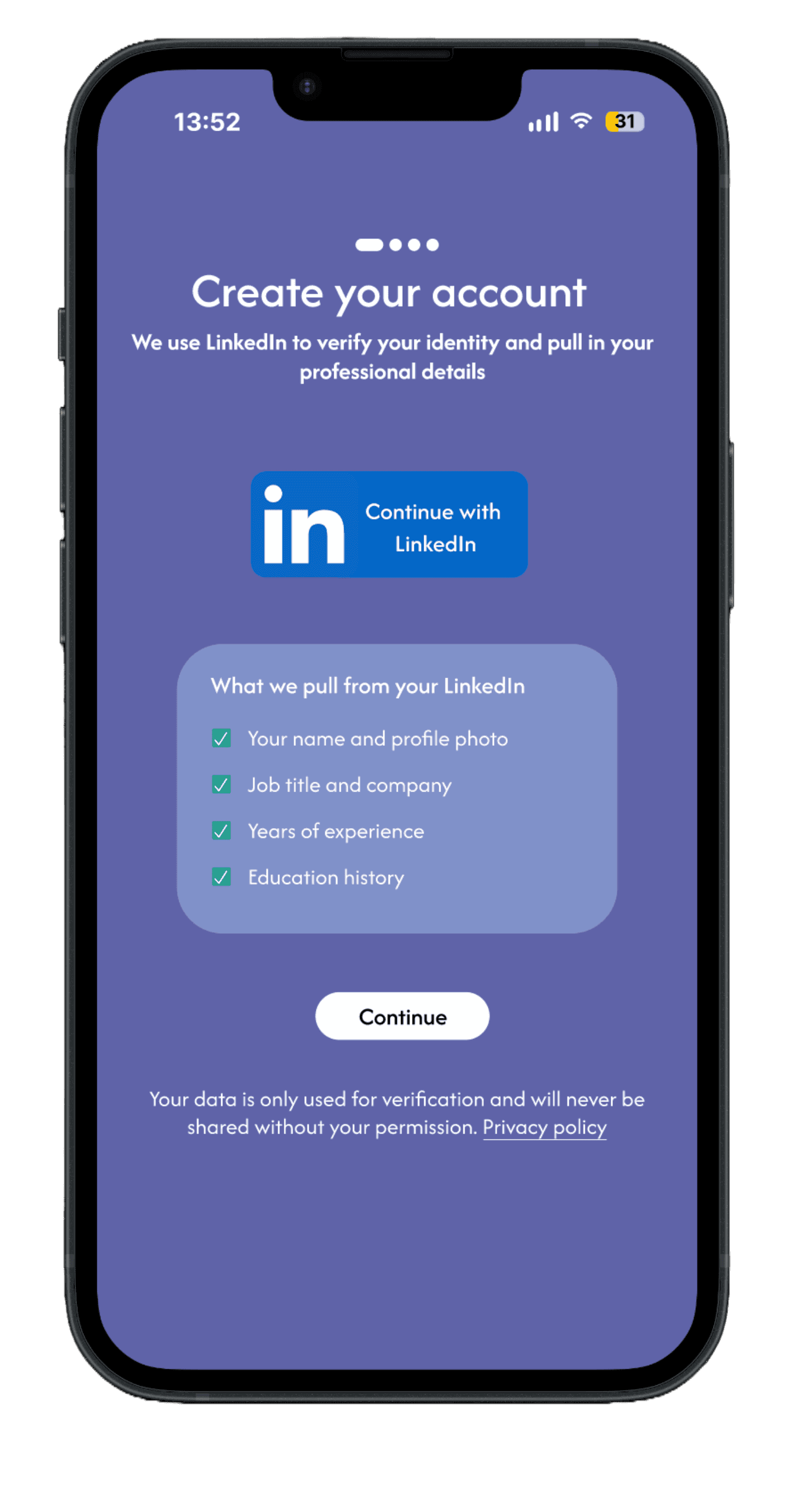
A key decision during iteration was replacing the manual 'fill in your details' screen for mentors with a single LinkedIn authorisation step, which removes friction and ensures instant credential verification with no two-tier verified/unverified system.
From ideas
to structure
BIO
PROJECTS
CONTACT